

FAQ
Frequently Asked Questions
Have questions? We have answers
Get a Free PlanWhat data is needed to implement AI?
You need a history of the events you want to forecast or classify: transactions, requests, orders, production figures, user behaviour. What matters is not only volume but also the depth of the period and how completely events were recorded.
The state of the data almost always turns out to be a task of its own. In the New Products Group case some retail outlets did not record zero stock, so the system confused an absence of sales with an absence of demand — approximation methods corrected that distortion and materially improved the forecast. This is why we start an AI rollout with a data audit rather than with choosing a model.
How long does it take to build and implement an AI solution?
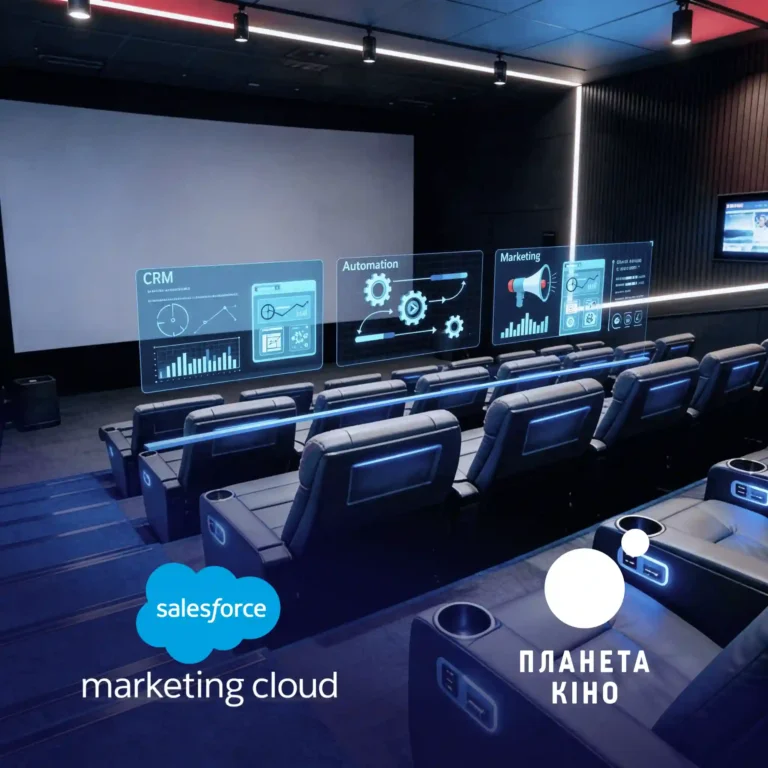
The timeline depends on the state of the data and on how many systems the integration touches. For reference, the real durations of our projects: the churn prediction model for Edenred took five months, the analytics and churn model for Planeta Kino eight months, and production forecasting for New Products Group and the recommendation system for goodwine twelve months each including rollout.
Testing a hypothesis on a PoC is usually much faster. We give a precise estimate after the data audit and once the scope of the first phase is agreed.
Can we start with an MVP or a proof of concept?
Yes, and for most tasks that is the most sensible start. A PoC checks one thing: whether the data holds a signal strong enough for the accuracy you need. That turns the decision about further investment into a matter of fact rather than expectation.
We apply this approach systematically. The first version of the model for New Products Group was built on a limited set of features while the tender was still running and, despite its simplicity, delivered the highest accuracy of all participants. The full ensemble model was developed only after the hypothesis was confirmed.
Can an AI solution be scaled after launch?
Yes. After launch a model needs support: forecast quality is monitored and the model itself is retrained on new data, because customer behaviour and the market change.
Scaling usually goes one of two ways: extending to adjacent tasks and categories — at New Products Group the first model became the foundation for other product lines — or connecting new channels and systems, as at Planeta Kino, where recommendations run simultaneously in push, email and the mobile app.
Which healthcare organisations does Moodle LMS suit?
The platform has no industry restrictions, so it is used equally by hospitals and multi-speciality inpatient facilities, private clinics and medical centres, networked healthcare organisations with branches in several cities, diagnostic laboratories and pharmaceutical companies.
Size is not an obstacle either: an LMS system built on Moodle works for a single department of a hundred people and for a network with thousands of users. The difference between those cases lies in the course structure, the roles and the scope of integrations, not in the platform itself.
Can Moodle be used for continuing professional development of doctors?
Yes — as the technology platform for organising such programmes. Moodle supports individual learning paths by position and speciality, annual plans with deadline control, automatic reminders about unfinished programmes and a full training history for any period.
There is an important boundary: IWIS does not deliver medical courses, does not issue professional certificates and does not accredit CPD programmes. The content is prepared by the organisation itself or by its educational partner, while the platform provides the environment, completion control and verified data about the result.
Can distance learning be organised for medical staff?
Yes, and this is most often the reason for implementing a platform in the first place. Staff work shifts and some of them sit in branches, so gathering everyone in one room is impossible. An online course is tied to the person rather than to a date and a place: the employee logs in from the computer in the staff room, from home or from a phone, and sees the same progress.
A course can contain video, documents, images, links and interactive H5P exercises, and topics can be released step by step. Progress is recorded for each element, so it is visible not only that a course was finished but exactly where an employee stopped.
Is Moodle suitable for onboarding new hospital staff?
Yes. The induction programme is assigned automatically on the day of hire and runs identically for everyone in that position — separately for a doctor, a nurse, a reception administrator or a laboratory technician.
The programme covers internal rules, patient care standards, sanitary and anti-epidemic requirements, work with the medical information system and equipment operating instructions. It ends with a test and a record of clearance for independent work, which makes the adaptation period manageable instead of dependent on how busy the mentor is.
Can testing and certification of employees be run in Moodle?
Yes. The platform supports a question bank with random selection, time limits and a capped number of attempts, different task formats — from single choice to clinical scenarios with detailed marking — and periodic scheduled assessment with automatic test assignment.
Once the conditions are met, the system generates a personalised record of completion of the organisation's internal programme. That is confirmation of internal training, not a state or professional certificate: those are issued by authorised bodies and lie outside the scope of an LMS.
Is Moodle LMS suitable for pharmaceutical companies?
Yes, and the task differs from a hospital one: the team is distributed, medical representatives work in the field, and manufacturing and quality assurance have their own standards. Moodle brings those programmes into one system with unified reporting.
Typical directions are training of pharmaceutical company staff by role (manufacturing, quality control, R&D, marketing, medical affairs, distribution), pharmaceutical sales rep training with a knowledge check before going into the field, dedicated programmes for each product launch, and several languages in one system for international teams. We have already worked in the pharmaceutical industry: we rebuilt the reporting system for Servier and designed a new data architecture for Yuria-Pharm.
Can GMP/GxP training be configured in Moodle?
Yes, as training scenarios. The platform makes it possible to assign GMP and GxP programmes by role and department, repeat them on a schedule, record acknowledgement of internal policies and SOPs tied to the document version, and automatically reassign a course to everyone affected by an updated procedure. Compliance status is visible by department and individual employee for any date.
At the same time we do not claim regulatory conformity of the platform out of the box. Conformity with specific requirements, including computerised system validation, is defined separately — together with your quality department and within the agreed scope of the project.
Can Moodle be integrated with the organisation’s internal systems?
Yes, and in most projects the integrations deliver the main effect. Single sign-on is configured through Active Directory, LDAP or SSO, and employees and the department structure are synchronised from the HR system, so hires, transfers and departures appear in the LMS automatically, without manual user management.
Data exchange runs through the platform REST API, webhooks or an integration middleware service. Training data can be pushed to an internal portal, a BI system or HR records, and video conferencing and external testing services can be connected when they are already in use. The exact list depends on which systems the organisation already runs.
Does IWIS provide Moodle support after launch?
Yes. Support runs under an SLA and covers core and plugin updates including security patches, availability and performance monitoring, backups, consultations for platform administrators and enhancements on request.
This is not a separate service that starts after the project — it is a continuation of the same work: the LMS platform we modernised for a leading Ukrainian bank is still maintained by our team. The scope of support is agreed with you, from basic technical maintenance to developing the platform with new modules and reports.
How long does Shopify store development take?
A basic store on a stock theme, with payments, delivery and a populated catalogue, goes live in 2–4 weeks. A project with a custom theme, non-standard cart logic or back-office integration takes from several weeks to several months. The driver is not the design but the number of integrations and the complexity of the business rules.
Can a Shopify store be built with a bespoke design?
Yes. We either adapt a stock theme to your brand design system or build a custom Shopify theme from scratch on Online Store 2.0, giving full control over the markup and the sections your content manager edits alone. The front end is built in Liquid. We watch speed closely: a theme with dozens of animations easily fails Core Web Vitals.
Do you develop custom Shopify apps?
Yes, we build private apps for a specific store: Admin API work, webhook handling, custom admin screens through App Bridge, background jobs. Typical tasks are stock and price synchronisation with an accounting system, internal reports and non-standard order processing. It pays off when subscriptions to several public apps cost more than your own code.
Can Shopify be integrated with CRM, ERP and other systems?
Yes. The exchange is built on the Admin API (GraphQL) and webhooks: orders, customers, stock, prices and statuses. We integrate CRM systems including Salesforce, ERP and accounting systems, payment gateways, delivery services, Klaviyo and analytics. Before development we fix the source of truth for each data type, the sync frequency and the behaviour on exchange errors.
Can you migrate an existing online store to Shopify?
Yes — from Magento, BigCommerce, WooCommerce and custom platforms. We move the catalogue with variants and images, customers, order history, content and navigation. The most important part is SEO: 301 redirects from old URLs, meta tags, canonicals and sitemap. After the move we reconcile the data, monitor indexing and test checkout on real payments.
What is the difference between Shopify and Shopify Plus?
Shopify Plus is the plan for large e-commerce, from $2,300 per month. The key differences are checkout customisation through Checkout Extensibility, expansion stores for different countries and currencies, built-in B2B with price lists and payment terms, automation via Shopify Flow and Launchpad, and higher API limits. Move when the store genuinely hits the limits of the base plan.
Do you provide Shopify support after launch?
Yes. Shopify support covers bug fixing, integration monitoring, payment and delivery checks, app compatibility after platform updates and preparation for seasonal peaks. The format is an agreed monthly hour budget or work on request. Changes ship through a staging environment. We currently support more than 37 projects.




IWIS development principles