


FAQ Background

FAQ

Frequently Asked Questions

Have questions? We have answers

Get a Free Plan

What type of analytics do you provide?

It all depends on the task. If real-time metrics are needed – we build interactive dashboards. If understanding customer behavior or demand forecasting – we connect analytical models. If consolidating everything into one window – we create a unified analytics portal. In most cases, we start with an audit: what's already there, what decisions are made, where money is lost. Then we tailor the solution to the business, not vice versa.

What’s the difference between BI and Business Analytics?

BI is about real-time visibility: dashboards, reports, metric control. Business analytics is about analyzing causes, forecasting, and scenario modeling. Conventionally: BI shows profit dropped in September, analytics explains why, what happened to customer behavior, and how to fix it. We usually combine both approaches.

Why do I need business analytics?

Business analytics shows which directions bring profit and which drain resources. You see which customers drop off, where processes stall, what affects conversion. It's a way to spot problems before they turn into losses. And conversely – to scale what works. Decisions become more precise, reactions faster.

What is Business Intelligence (BI)?

This is an approach to decision-making based on facts. It involves systematic collection, processing, and visualization of business data so that managers and teams can see what's happening in the company in real time. BI answers what happened, why, and what to do about it. These are dashboards, analytical models, automatic reports that allow viewing the business as a holistic system.


Learn more about the business intelligence service

Still have questions?

If you did not find what you were looking for, contact us.
Contact Us
Additionally

IWIS development principles

Digital transformation solutions built around business needs

Our transformation initiatives focus on clear operational objectives. The work is directed toward execution, transparency, and control of core business processes. Companies operate faster. Reporting becomes clearer. Operational friction decreases without additional complexity.

IWIS operates as a digital transformation agency where change occurs through a structured program, not through a set of tools. Strategy, technology, and process optimization align within a single execution model. Fragmented platforms transform into a unified digital ecosystem. Teams work faster. Leadership relies on consistent data. This approach has been applied across more than 90 projects. These environments are complex, and stability is critical.

Digital transformation solutions built on business needs

Each initiative begins with a business-focused assessment. Teams examine systems, workflows, and data flows. This helps identify bottlenecks, manual operations, and operational risks. It also reveals where execution slows down and where productivity declines.

Next, a clear action plan defines measurable outcomes. As a digital transformation company, IWIS focuses on implementation, not theory. Automation consolidates repetitive tasks. Cloud integration connects systems. Data analytics and API integration unite tools into a single operational environment. Legacy system modernization occurs in stages. Day-to-day operations remain stable throughout the process.

Business digital transformation: from strategy to implementation

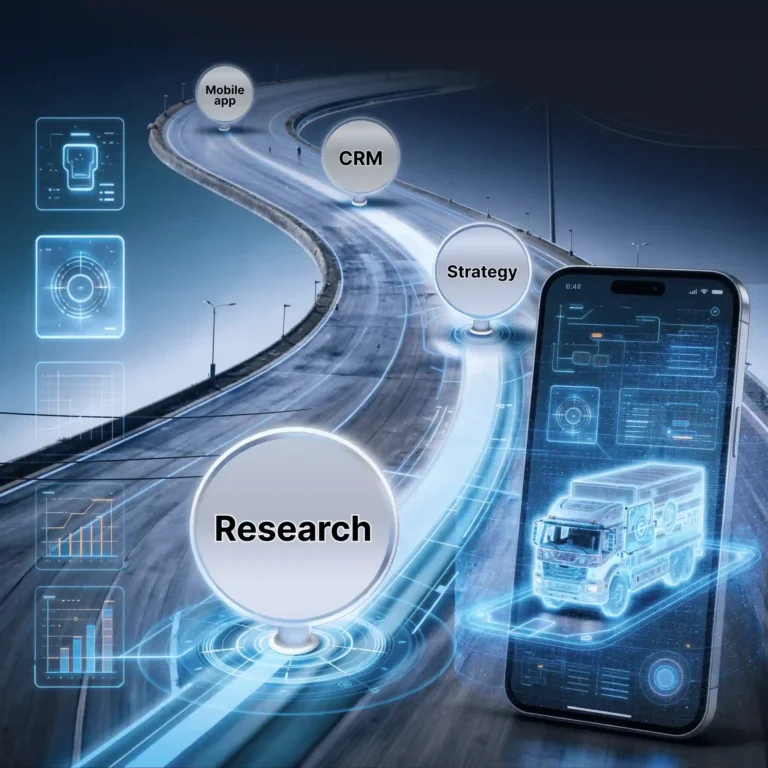
Large-scale change requires structure and discipline. Adding new tools to inefficient processes increases complexity. Teams begin with assessment and planning. Then they move to system integration. As the organization grows, long-term optimization occurs.

Previous
1 2 3
Next